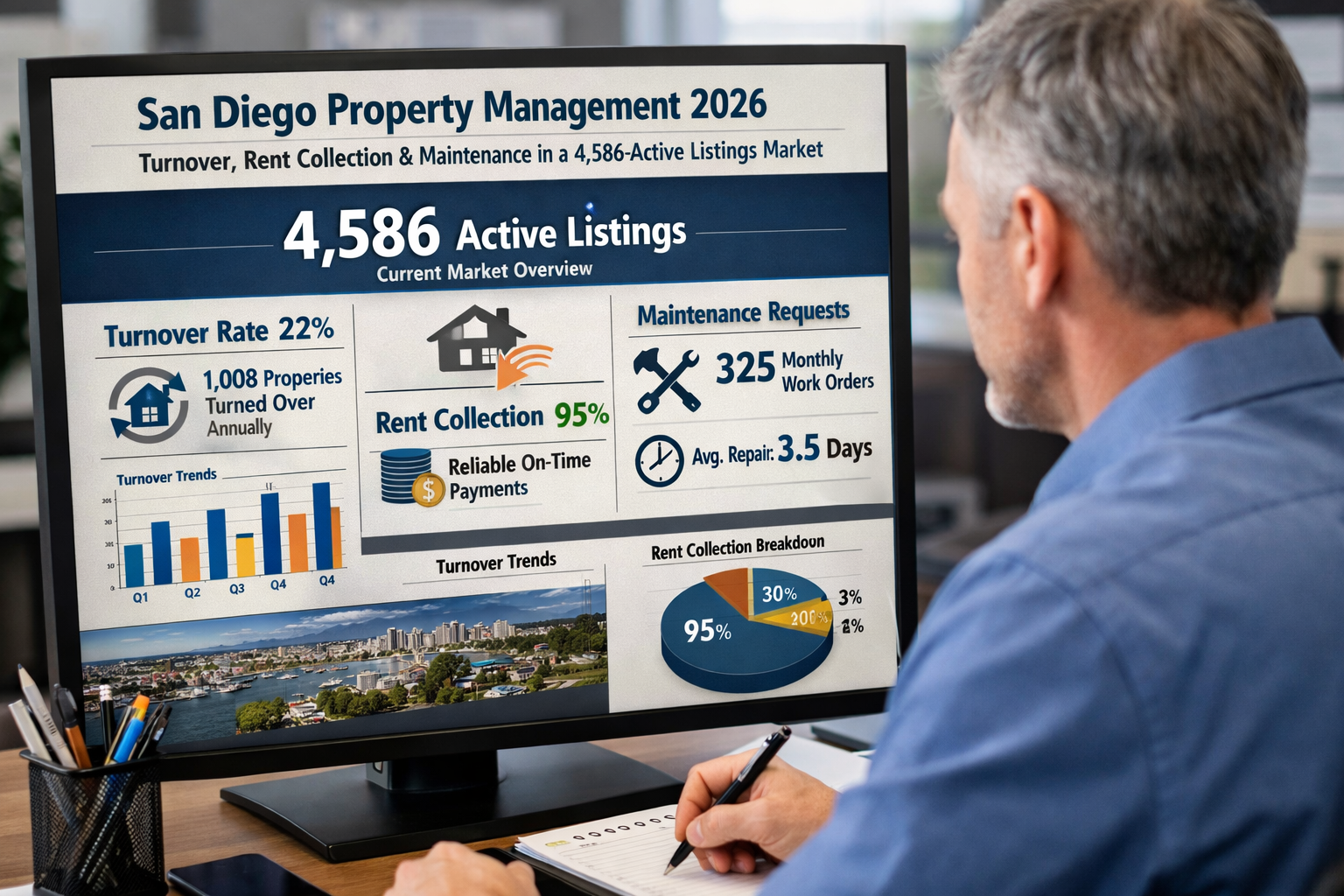
San Diego Property Management 2026: Turnover, Rent Collection & Maintenance in a 4,586-Active Listings Market
Market Context for Property Management in San Diego April 2026 (March 2026 data)
The March 2026 San Diego housing market update paints a nuanced picture for property managers. Active listings sit at 4,586, up 11.0% from prior periods, with a median listing price of $925,000 (up 2.8%) and a median days-on-market of 38. The House Price Index stands at 570, up 0.5%. For landlords and self-managing investors, these numbers translate into a market with more inventory and still‑healthy price appreciation, but with greater tenant choice and slightly longer vacancy cycles in some submarkets. In practice, this means you should expect more competition for rental tenants in hot coastal neighborhoods, while inland and newer-device markets may offer steadier occupancy. The key is to align operations, budgets, and rents with neighborhood realities—Carlsbad and Encinitas, La Jolla and Pacific Beach, North Park and Hillcrest, Oceanside, San Marcos, Poway, and Scripps Ranch each have different supply-demand dynamics that affect turnover, collections, and costs.
From an asset-management perspective, the data underline two truths: equity is growing (prices are higher year over year), and rental demand remains sensitive to affordability and job stability. Your strategy should reflect both price momentum and the need to protect cash flow through tight expense controls and proactive maintenance.
How Economic Conditions Drive Turnover, Rent Collection, and Maintenance Costs
- Tenant turnover. A larger active-listing pool can increase vacancy risk if tenants shop aggressively for better deals. To counter this, focus on turnover-reduction levers: pre-renewal outreach, competitive but fair renewals, and property improvements that noticeably boost perceived value (updated fixtures, curb appeal, and reliable systems). In SD, cost-effective upgrades—bright LED lighting, modern kitchen hardware, durable flooring—often translate into higher renewal rates and quicker re-leases.
- Rent collection. With rising listing activity and potential affordability constraints, timely rent collection hinges on predictable processes and clear communication. Automate payments, enforce reasonable late-fee policies, and document all communications. Consider offering flexibility around ACH/online payments and electronic notices to reduce friction, especially for long-tenure tenants.
- Maintenance costs. SD properties near the coast (Carlsbad, Encinitas, La Jolla) face salt and humidity challenges that accelerate wear on mechanical systems and exteriors. Inland markets (Poway, Scripps Ranch, San Marcos) may see different wear patterns and humidity-related issues. Build a proactive maintenance calendar: quarterly HVAC checks, roof and gutter maintenance, sealant and paint touchups on exterior finishes, and early replacement plans for appliances with average life cycles. Establish a maintenance reserve (3–6 months of PITI and expected capex) to weather inflation and supply-chain delays.
- Property values and equity. The price uptick evident in the SD data supports ongoing equity growth, which can improve refinancing options and equity release for improvements. When planning capex, model how upgrades affect rent potential and net cash flow, not just resale value. Neighborhoods with strong rental demand—for example, central coastal-to-urban clusters and select inland hubs—often yield better cash-on-cash outcomes when maintenance is disciplined and rents are aligned with market comps.
Actionable Tactics for Self-Management in San Diego
- Lock in a disciplined budget. Start with a 3–6 month reserve for PITI plus capex. Map a separate line item for annual maintenance, capital improvements, and vacancy costs.
- Price to market, then manage renewals. Use neighborhood rent comps (Carlsbad and Encinitas coastal areas; North Park and Hillcrest in central SD) to set rents. Plan for modest increases at renewal (within state and local limits) to reflect market strength while staying competitive.
- Lease strategy that reduces turnover. Offer 9–12 month leases in softer markets and 12–24 month options where tenants seek stability. Include escalation clauses tied to a transparent CPI metric or a capped percentage to balance predictability with market growth.
- Maintenance and vendor readiness. Build a vetted vendor list with SLAs for response times. Pre-negotiate service agreements for preventive maintenance (AC/heat, plumbing, roofing). Track and benchmark response times and repair costs by district (coastal vs inland) to optimize scheduling and spend.
- Compliance and documentation. Stay current on California and San Diego regulations: AB 1482 rent cap and just-cause eviction protections, local registration or licensing requirements, and any city-specific tenant protections. Consult a local attorney or property manager for updates, especially if you own multiple properties across different SD neighborhoods.
- Neighborhood-specific notes. Coastal markets (La Jolla, Pacific Beach, Carlsbad) may demand higher upkeep and insulation against salt-related wear; inland markets (Oceanside, San Marcos, Poway) can offer steadier occupancy but require proactive landscaping and exterior maintenance to keep rents stable. In higher-demand cores (North Park, Hillcrest), prioritize curb appeal and modern interiors to secure renewals.
When to Hire a Professional Property Manager and SD Regulations to Know
If you own more than a couple of units across multiple neighborhoods, or you find yourself juggling urgent repairs, evictions, or complex compliance, professional management becomes cost-effective. A PM can consolidate rental pricing, screening, legal compliance, vendor management, and financial reporting—saving time and reducing risk.
In San Diego, watch for local regulatory changes that affect rents, eviction timelines, and licensing. California’s AB 1482 sets rent cap and just-cause eviction standards that apply to many multi-unit buildings, with local enforcement and exemptions. San Diego city ordinances may add requirements around tenant protections or rental registrations. Always verify current rules before setting policies or executing renewals.
If you’re not ready to hand off day-to-day management, consider a hybrid approach: retain control over tenant selection and lease terms while outsourcing maintenance scheduling and critical compliance tasks to a PM, then escalate to full-service management as your portfolio grows.
Looking for investment properties in San Diego? Browse our listings or contact our team to get started.